NBA Overtime Betting Rules: How Extra Periods Affect Your UK Wagers
 Available in US
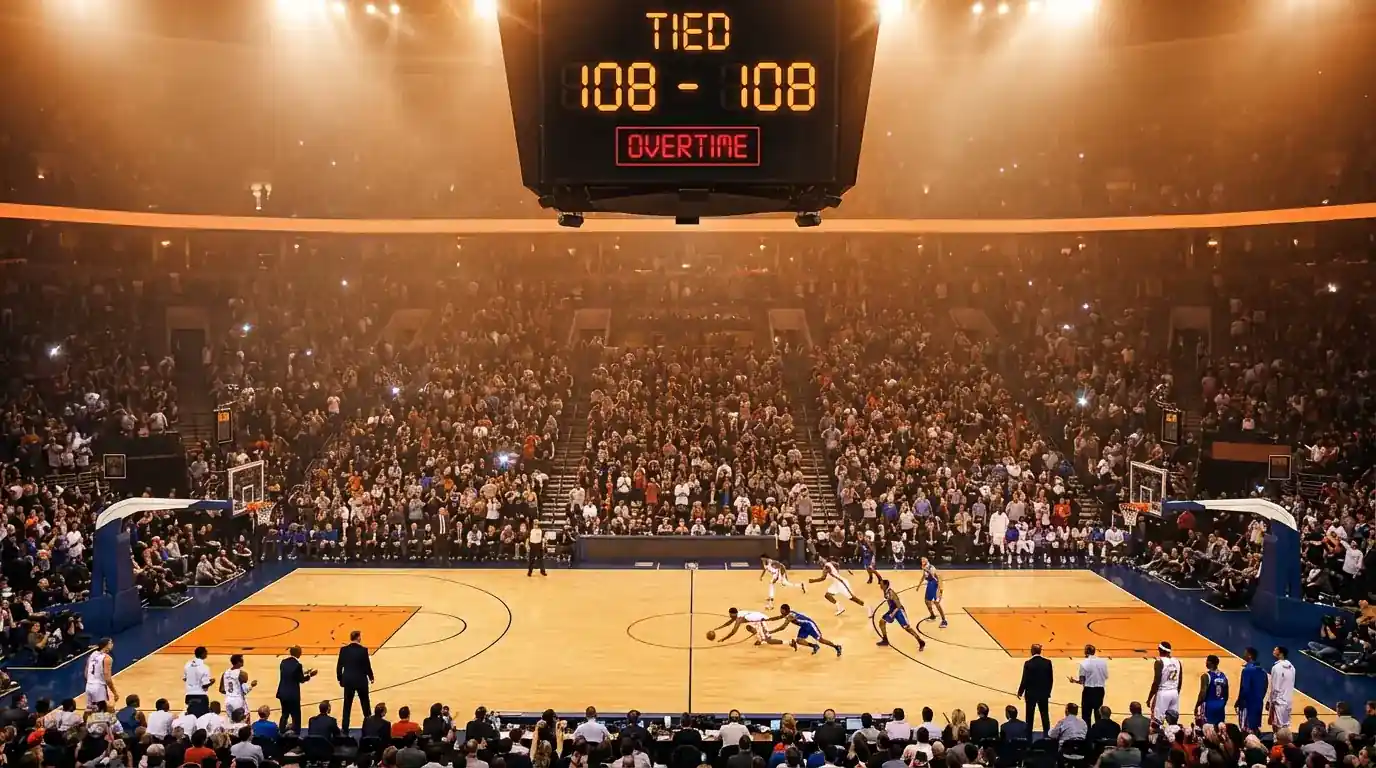
I still remember the sinking feeling when my carefully researched Lakers spread bet evaporated in overtime back in 2019. The original line had hit perfectly at the end of regulation — then LeBron’s heroics in the extra five minutes turned my winner into a loser. That night cost me more than money; it taught me that understanding overtime rules isn’t optional in NBA betting. It’s essential.
After nine years analysing NBA markets for UK punters, I’ve watched countless bettors make the same mistake I did. They place wagers without knowing whether overtime counts, then panic when games run long. The reality is straightforward once you grasp the core principles, but the devil lurks in the details — and those details vary depending on which market you’re betting and which bookmaker you’re using.
Roughly 6% of NBA regular season games — around 74 out of 1,230 matches — end up needing extra periods to determine a winner. That might sound like a small percentage, but across a full season of betting, you’ll encounter dozens of overtime situations. Getting caught unprepared isn’t a matter of if, but when.
This guide breaks down exactly how overtime affects every major betting market, highlights the critical differences between UK bookmakers, and arms you with the knowledge to make informed decisions when games go long. Whether you’re betting spreads, totals, player props, or live markets, you’ll know precisely what to expect when that fourth quarter buzzer sounds with the scores level.
How Often Do NBA Games Go to Overtime?
My spreadsheet from last season tells an interesting story. I tracked 1,230 regular season games, and exactly 71 went to overtime — sitting right at that 6% historical average. But here’s what the raw numbers miss: overtime games cluster unpredictably. In December 2025, I counted nine OT games in a single week. Then January passed with barely a handful.
The playoff picture shifts dramatically. Postseason games carry higher stakes and tighter defensive intensity, pushing overtime rates closer to 8-9% in recent years. Series that stretch to six or seven games seem magnetically drawn to extra periods — think about how many iconic playoff moments have occurred in overtime. For betting purposes, this means your exposure to OT scenarios increases significantly during April through June.
Several factors correlate with overtime likelihood. Divisional matchups between evenly-matched teams produce more close games. Back-to-back situations create fatigue that often levels the playing field. And certain teams simply play more overtime games due to their pace and defensive style — slow, grinding teams like the Knicks historically see more close finishes than run-and-gun squads.
Understanding these patterns won’t help you predict overtime, but it does inform bankroll management. If you’re betting heavily on markets where overtime inclusion matters, expect variance. That 6% figure means roughly one in seventeen games will test your knowledge of OT rules.
The scheduling quirk that catches most UK bettors? Games tipping off at 2am or 3am our time are more likely to feature tired teams on back-to-backs, which correlates weakly but noticeably with overtime frequency. Something to consider when you’re placing those late-night wagers.
Which Betting Markets Include Overtime
The golden rule I drill into every punter I advise: your three core NBA markets — moneyline, point spread, and totals — all include overtime for settlement purposes. Full stop. This isn’t a quirk or an exception; it’s the industry standard across every UK-licensed bookmaker I’ve encountered in nearly a decade of professional analysis.
Why does this matter so much? Because overtime fundamentally changes the mathematics. An extra five minutes adds roughly 15-25 points to the combined score on average. A spread that looked dead at regulation’s end can resurrect — or collapse. Understanding this inclusion is the foundation everything else builds upon.
The logic behind including overtime in these markets is straightforward: they’re designed to pick the game’s ultimate outcome. A moneyline bet asks who wins the game, period. The spread asks who covers accounting for the full contest. Totals measure the complete scoring output. Stopping at regulation would create arbitrary cutoffs that don’t reflect what actually happened on the court.
Moneyline and Overtime
Moneyline betting offers the cleanest overtime scenario. You pick the winner; they either win or they don’t. Overtime merely extends the opportunity for your selection to prevail — or fail. There’s no partial result, no push possibility, no ambiguity whatsoever.
I find moneyline particularly appealing when I suspect a game might go long. If I’ve identified an underdog with strong closing ability and clutch performers, overtime actually increases my expected value. The extra minutes provide more opportunities for variance to work in my favour against the pre-match odds.
The practical implication: if you’re backing an underdog on the moneyline and they force overtime, you haven’t lost yet. I’ve seen countless punters mentally write off their ticket when regulation ends tied, not realising they’re still very much alive. Overtime is essentially a coin flip with fresh legs — anything can happen.
One thing to remember: NBA games cannot end in a draw. Unlike football where you might see a “draw no bet” option, basketball always produces a winner. Overtime periods continue until someone leads when time expires. This guarantees your moneyline bet will settle one way or the other.
Point Spread Settlement in OT
Spread betting in overtime creates the most dramatic swings I witness in NBA markets. That Lakers game I mentioned earlier? The spread was -4.5, and LA led by exactly 5 points when the fourth quarter ended. My bet had landed. Then overtime happened, the opponent rallied, and the final margin shifted by 8 points in the wrong direction.
The mathematics here deserve attention. Jeff Sagarin’s research pegs home court advantage at roughly 2-3 points in normal circumstances, but overtime neutralises this somewhat — both teams are exhausted, rotations shorten, and the pressure equalises. Teams playing at altitude in Denver, Utah, or San Francisco typically enjoy 3-5 points of additional home advantage in regulation, but this edge diminishes as fatigue compounds in extra periods.
Spread bettors need to understand that overtime essentially adds a mini-game where previous momentum often resets. I’ve tracked overtime-specific scoring for years, and the correlation between regulation performance and OT performance is weaker than most assume. A team dominating for 48 minutes can collapse in the extra five, and vice versa.
The key insight: if you’re sweating a spread bet heading into overtime, recognise that anything from the previous 48 minutes matters less than you think. Fresh legs, adjusted rotations, and clutch performance under pressure determine overtime outcomes more than cumulative statistics.
Over/Under Totals and Extra Periods
Totals betting in overtime scenarios heavily favours the over. This isn’t rocket science — you’re adding at least five minutes of additional scoring to a game that was already closely contested. My records show overtime games average 18-24 additional combined points beyond what regulation would have produced.
Here’s where it gets interesting. Lines are set assuming roughly 6% of games go to overtime, so that expectation is already baked into the number. But human psychology doesn’t work in aggregates. When you’re watching a tight game approach the final minutes, knowing overtime would likely push your under bet into losing territory creates real emotional weight.
I’ve adjusted my totals strategy specifically for this dynamic. Games I identify as overtime candidates — evenly-matched teams, slow pace, strong defences — I approach totals more cautiously. The asymmetric risk bothers me: a regulation blowout kills both over and under equally, but a close game that goes long specifically punishes under bettors.
Double and triple overtime games obviously compound this effect. The highest-scoring NBA game in recent memory featured multiple overtime periods, pushing totals well past 300 combined points. Rare? Absolutely. But when it happens, under bettors get obliterated regardless of their pre-game analysis.
Markets That Exclude Overtime
Not every market treats overtime the same way, and this is where I see UK bettors stumble most frequently. Period-specific markets — quarters and halves — operate under entirely different rules. Understanding these exceptions protects you from unpleasant surprises and opens up strategic opportunities.
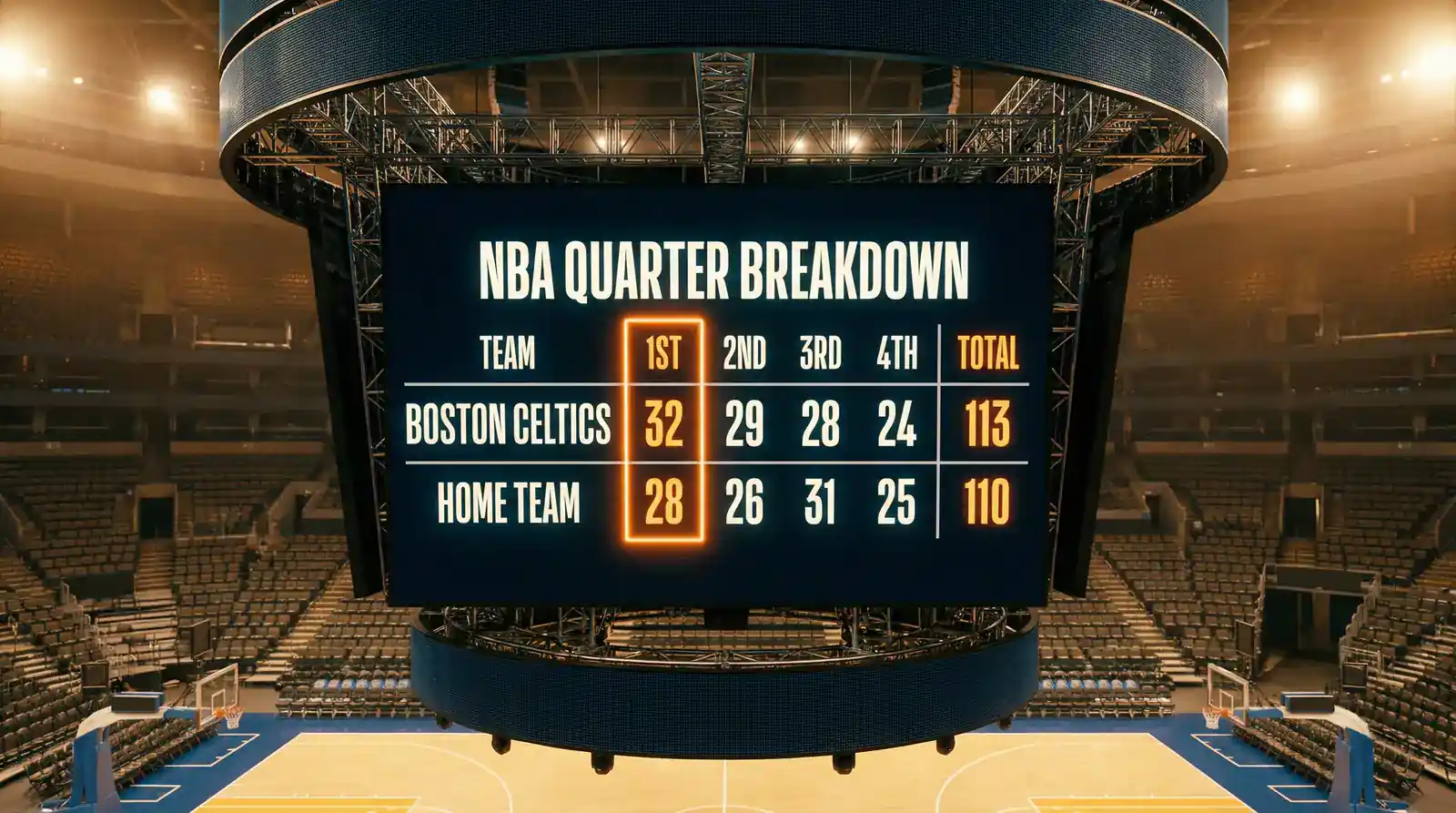
The principle is logical once you grasp it: markets designed around specific time segments only include scoring from those segments. First quarter bets settle when the first quarter ends. First half bets settle at halftime. Overtime, being a separate period entirely, falls outside these boundaries.
Quarter and Half Betting
Quarter and half markets provide a haven from overtime uncertainty when you want it. Your first quarter spread bet settles definitively after twelve minutes. Your second half totals bet concludes when the fourth quarter buzzer sounds. What happens in overtime has zero impact on these wagers.
I use this strategically. When I’ve identified a team with strong starting units but questionable depth, first quarter markets let me exploit that edge without overtime exposure. Similarly, second half unders on teams with shallow benches capture fatigue-related scoring drops without risking an OT explosion.
The fourth quarter specifically deserves mention. Fourth quarter spread and totals bets settle at the end of regulation’s fourth period — not when the game actually concludes. I’ve profited from situations where a team dominates the fourth quarter, covers that specific spread, then loses the overtime period entirely. My fourth quarter bet won; full-game bettors got different outcomes.
One nuance: “second half” in NBA betting terminology means quarters three and four only. It does not include overtime. Some American sportsbooks define this differently, but UK-licensed operators consistently exclude OT from half markets.
Regulation Time Only Markets
Some bookmakers offer explicit “regulation time” versions of standard markets. These are exactly what they sound like — the bet settles based on the score after 48 minutes, ignoring any overtime that follows. A tied score at regulation’s end typically results in a push on regulation-only spreads.
I find these markets underutilised by UK bettors. When I’m confident in a tight game finishing close, regulation-time totals can offer value. The line is typically set lower than the full-game equivalent, and I avoid the asymmetric risk of overtime inflation.
Availability varies significantly between bookmakers. Some display regulation-only options prominently; others bury them in secondary markets or don’t offer them at all. Before placing a bet you intend as regulation-only, verify you’ve selected the correct market — the naming conventions aren’t always intuitive.
The draw or “tie” option sometimes appears in regulation-time spreads. Since NBA games can’t actually end in draws, this outcome specifically means the game goes to overtime. Backing the tie at inflated odds — sometimes 20.00 or higher — represents a pure overtime prediction play.
How UK Bookmakers Handle Overtime Differently
After years of comparing settlement across multiple accounts, I’ve learned that assuming uniformity between UK bookmakers is a costly mistake. The broad strokes align — moneyline, spread, totals all include overtime — but the finer details diverge in ways that matter for serious bettors.
The most significant variations appear in player prop settlement. Some operators explicitly state that all player statistical markets include overtime unless otherwise specified. Others default to regulation-only for certain prop categories, particularly those involving playing time thresholds. I always check the specific rules before placing prop bets during high-profile games likely to attract overtime.
NBA games must run at least 43 minutes for most bets to stand — that’s the standard minimum duration requirement. This translates to roughly five minutes remaining in the fourth quarter. Abandoned games before this threshold typically void all wagers, regardless of the score. Different bookmakers interpret edge cases slightly differently, so games halted at exactly the 43-minute mark sometimes produce inconsistent rulings across platforms.
Settlement timing also varies. Some operators settle overtime-included markets within seconds of the final buzzer. Others wait for official NBA scoring confirmation, which can take 30-60 minutes. For bettors managing bankroll across multiple games, this delay matters — your funds might show as pending longer than expected.
My recommendation: before the season starts, read the basketball rules section for every bookmaker you use regularly. Screenshot the relevant paragraphs. When a disputed settlement arises, you’ll have documentation of what the rules stated when you placed your bet. I’ve successfully challenged incorrect settlements using this approach, but only because I could prove what the published rules said at the time.
How OT Affects Prop Bet Totals
Player props in overtime games produce some of the most contentious settlement discussions I encounter. The general principle across UK bookmakers mirrors the guidance from industry sources: for all three main statistical categories — points, rebounds, and assists — overtime is included for settlement purposes. But “general principle” and “universal application” aren’t the same thing.
The extra minutes matter enormously for props. A player hovering at 19 points with an over 19.5 line suddenly gets five more minutes to score. Star players often see increased overtime usage as coaches shorten rotations and ride their best performers. I’ve tracked numerous instances where seemingly dead props resurrected in extra periods.
Combination props — points plus rebounds, assists plus rebounds, the full PRA (points, rebounds, assists) — follow the same overtime-inclusive logic. The NBA’s heightened scrutiny of prop betting following integrity concerns in 2025 hasn’t changed how these markets settle. The league’s official position emphasises that proposition bets on individual player performance require additional oversight, but settlement mechanics remain consistent.
One critical exception: props tied to specific game segments follow segment rules. “First quarter points” excludes overtime. “First half rebounds” stops at halftime. Only full-game player props incorporate OT statistics. This distinction catches bettors who assume all props work identically.
For deeper exploration of how player props settle across various scenarios, including the must-start versus must-play distinction, my complete guide to NBA player props settlement covers the nuances thoroughly.
In-Play Betting During Overtime
The moment a game enters overtime, live betting markets reset and recalibrate. I find this period offers some of the most interesting opportunities — and some of the most dangerous traps. The key is understanding how bookmakers approach this five-minute mini-game.
Live spreads during overtime typically start near pick’em, reflecting the inherent unpredictability of extra periods. Whoever wins the tip or scores first might see their line shift quickly, but the margins stay tight. I’ve observed spreads rarely exceeding 3.5 points during overtime, even when one team builds what looks like a comfortable lead.
Live totals for overtime specifically usually open around 20.5-22.5 points combined, depending on the teams’ pace. Fatigued players tend to take more jump shots, reducing offensive rebounding and transition opportunities. This creates a slightly lower-scoring environment than the per-minute pace of regulation might suggest.
The speed of in-play betting during overtime intensifies dramatically. Five minutes of game time translate to perhaps 12-15 minutes of real time with timeouts and fouls, but lines move constantly. If you’re not comfortable with rapid decision-making and immediate execution, overtime live betting might not suit your style.
One profitable pattern I’ve identified: backing teams that struggled in the fourth quarter but forced overtime anyway. The market often overcorrects based on recent momentum, offering value on the team that “should have lost.” Overtime resets psychology in ways the betting public doesn’t fully appreciate.
Double and Triple Overtime Scenarios
Multiple overtime games are rare — perhaps two or three per season reach triple overtime — but when they occur, every betting principle amplifies. That’s 58 minutes or more of basketball instead of 48, with exhausted players making uncharacteristic decisions.
Spread implications compound in multi-OT games. A team that looked certain to cover in regulation might fade badly as their star player logs 50+ minutes. Alternatively, a deep bench can become the deciding factor when starters are gassed. I’ve seen double-overtime games where the final margin had zero relationship to the pre-game spread because fatigue distorted everything.
Totals in double overtime routinely push past 260 combined points. Triple overtime has produced games exceeding 300. If you held an under ticket, it was dead long before the second overtime started. The asymmetry is brutal — overs benefit massively, unders get destroyed.
Player props in extended overtime games create outlier statistical performances. Fifty-point individual games become possible. Triple-doubles happen more frequently. Every prop line set assuming 32-36 minutes of playing time gets obliterated when a star plays 48+. This can work for or against you depending on your position.
My strategy for multi-OT scenarios? Cash out if offered a reasonable value. The variance becomes extreme, and protecting profit or limiting loss usually outweighs gambling on increasingly chaotic outcomes. The ego satisfaction of “letting it ride” rarely compensates for the stress.
Frequently Asked Questions
Do NBA futures bets include playoff overtime games?
Yes, futures bets on championships, conference winners, and similar season-long markets include all overtime periods played throughout the playoffs. The outcome that determines your futures bet — whether a team wins the title or a player wins MVP — incorporates everything that happens in overtime games. There’s no distinction between regulation and overtime when settling these long-term wagers.
How are live bets settled if a game goes to overtime?
Live bets placed during regulation follow the same rules as pre-match wagers — moneyline, spread, and totals all include overtime for settlement. Bets placed specifically during overtime settle based on the game’s final result. The timing of when you placed the bet doesn’t change whether overtime counts; only the market type determines that.
What happens to my half-time/full-time bet if the game goes to OT?
Half-time/full-time combination bets settle based on regulation time only for the half-time component, but include overtime for the full-time result. So if a team led at halftime but the game was tied at the end of regulation and they won in overtime, your bet would settle on that team leading at half and winning full-time. The overtime result determines the final winner.
Are double-overtime stats counted for player props?
All overtime periods count for player prop settlement, whether single, double, or triple overtime. Statistics accumulated in any overtime period add to the player’s final totals for betting purposes. This means a player on 24 points after regulation could reach 30+ across multiple overtime periods, potentially flipping your prop bet result.
Created by the ”nba Betting Rules” editorial team.