NBA Betting Integrity 2025: The Scandal That Changed Prop Markets
 Available in US
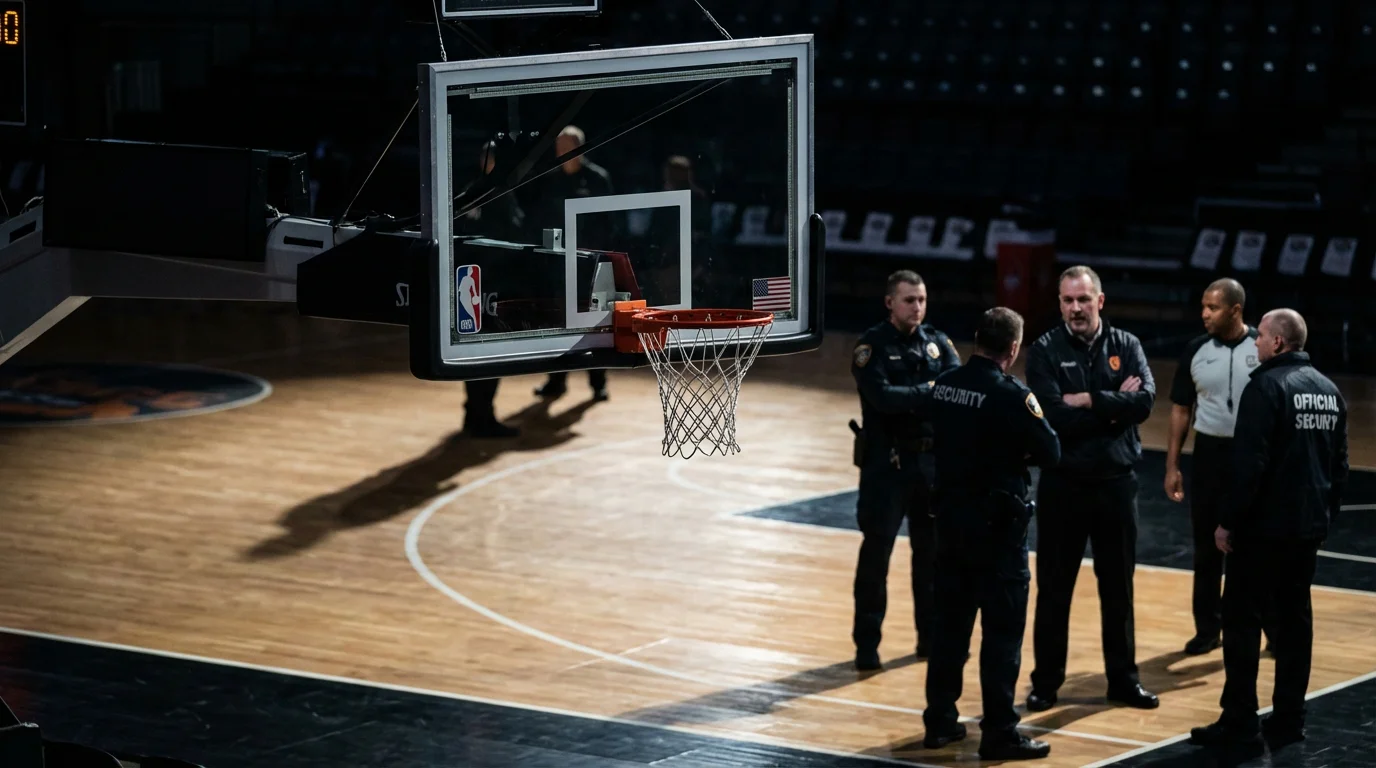
October 2025 shattered illusions about NBA betting integrity. When federal agents arrested 34 people including current and former players in the largest gambling scandal in league history, every bettor who’d placed a prop wager had to reckon with uncomfortable questions. Had I been betting on manipulated lines? Were those suspicious swings in player performance actually suspicious?
After nine years covering NBA betting markets, the 2025 scandal forced me to reassess assumptions I’d held about prop betting safety. The fallout continues reshaping how bookmakers offer these markets and how the league monitors player activity. Understanding what happened – and what changed – matters for every UK bettor participating in NBA prop markets.
The average NBA franchise is now worth approximately £4.4 billion, a valuation that depends partly on perceived competitive integrity. When that integrity comes into question, the financial stakes extend far beyond individual bets to the league’s fundamental commercial foundation.
This guide examines the scandal, its implications for prop betting, and the rule changes that followed.
What Happened in October 2025
Federal investigators arrested 34 individuals connected to illegal gambling operations and prop bet manipulation schemes. The accused included current players, former players, and associates who facilitated the activity. FBI Director Kash Patel characterised the case starkly: “Let’s not mince words, this is the insider trading saga for the NBA.”
The schemes varied in sophistication. Some involved players deliberately underperforming on specific statistical categories to help bettors who’d taken unders. Others allegedly involved sharing non-public injury information that moved lines. The common thread was exploitation of inside information for gambling profit.
Names that emerged included former All-Stars and current role players, demonstrating the problem spanned career stages and prominence levels. The investigation revealed communication networks, payment transfers, and betting patterns that supported federal charges.
The scale surprised observers who’d assumed post-legalisation transparency would deter manipulation. Instead, legal betting markets created more opportunities for exploitation, with prop bets proving particularly vulnerable to insider influence.
The scale of gambling marketing in professional sports provided context for the scandal. University of Bristol research documented over 6,282 gambling messages in NBA and NHL Finals broadcasts in 2025 alone. Players exist in an environment saturated with betting promotion while being told they cannot participate themselves – a tension that proved exploitable.
The league’s initial response emphasised cooperation with authorities while acknowledging the damage. Previous investigations had flagged “aberrational betting patterns” around certain players without finding violations – but this time, prosecutors had enough evidence for arrests.
For UK bettors, the scandal raised uncomfortable awareness. We’d been betting on markets that participants could influence. The question wasn’t whether this happened once or twice – it was whether it had been happening systematically while we assumed normal variance.
Why Player Props Are Vulnerable
The NBA’s official memo to teams stated the concern directly: “Proposition bets on individual player performance involve heightened integrity concerns and require additional scrutiny.” This acknowledgment validated what the scandal demonstrated.
Player props are uniquely manipulable because individual participants control their own statistics. A player can choose to take fewer shots, grab fewer rebounds, or dish fewer assists without obviously throwing a game. Team outcomes remain unaffected while prop bettors with inside information profit.
The NBA further noted that “protecting the integrity of our game is paramount, and we believe reasonable limitations on certain prop bets should be given due consideration.” This language signalled potential restrictions on which prop markets should exist at all.
Patrick Kelly, a professor who studies business ethics, offered an academic perspective on the systemic issues: “The current structure of legalized sports betting in the U.S. is essentially setting itself up for abuse and cases like these.” The rapid expansion of legal sports betting created prop markets faster than integrity monitoring could keep pace.
UK markets face the same fundamental vulnerability. While British bookmakers aren’t subject to American regulations, they offer the same prop types on NBA games. The manipulation risk crosses borders even if the legal framework differs.
NBA Rule Changes After the Scandal
The league responded with immediate and structural changes to integrity monitoring. Injury reporting requirements tightened dramatically – teams now must update injury status every 15 minutes rather than hourly during game days. This change reduces the window for insider information exploitation.
The NBA’s position on prop betting regulation became more assertive. Official statements indicated that “sports leagues should have control over the types of bets offered on their games.” This represents a significant shift toward leagues actively limiting betting markets rather than simply monitoring them.
Player education programmes expanded. Every player now receives detailed training on gambling regulations, warning signs of manipulation attempts, and reporting procedures for suspicious contacts. The goal is creating culture where players recognise and reject approach attempts.
Monitoring technology improved with enhanced pattern detection for prop betting activity. Suspicious lines and unusual betting volume now trigger faster investigation. The league partnered with integrity monitoring firms to analyse betting data across multiple jurisdictions simultaneously.
Whether these changes prevent future scandals remains uncertain. The financial incentives for manipulation remain enormous, and detection always lags behind innovation by bad actors. But the post-2025 environment at least represents heightened vigilance.
Impact on UK Betting Markets
UK bookmakers didn’t immediately restrict NBA prop markets following the scandal, but awareness clearly increased. Some operators reduced maximum stakes on player props, particularly for lower-profile players and less liquid statistical categories.
Pricing adjustments reflected the new uncertainty. Odds on player props widened slightly as bookmakers built additional margin to compensate for manipulation risk. The cost of placing these bets increased marginally even where availability continued.
I adjusted my own prop betting approach. Focusing on high-profile players whose every move is scrutinised feels safer than backing role players where manipulation would be harder to detect. Diversifying across multiple players and games reduces exposure to any single compromised line.
The scandal also highlighted the importance of betting with reputable operators. Licensed UK bookmakers participate in integrity monitoring programmes and report suspicious activity. Unregulated offshore sites lack these safeguards and might be more vulnerable to manipulated line placement.
Same-game parlays faced particular scrutiny. These products combine multiple correlated player props into single bets – precisely the format most vulnerable to manipulation. If one player in an SGP is compromised, the entire construction becomes questionable.
Long-term implications remain unclear. If the NBA successfully lobbies for prop betting restrictions in American markets, UK bookmakers might face pressure to follow suit. Alternatively, British regulators might conclude that existing monitoring is sufficient. The regulatory conversation continues.
Frequently Asked Questions
Are player props still safe to bet after the scandal?
Player props remain available at UK bookmakers, but the scandal revealed genuine manipulation risks. Focusing on high-profile players with intense media scrutiny may be safer than betting lesser-known players. Diversifying across multiple props and games reduces exposure to any single compromised market. No prop bet is guaranteed manipulation-free.
Has the NBA changed injury reporting rules?
Yes. Following the scandal, injury reporting requirements tightened from hourly updates to every 15 minutes during game days. This change reduces the window during which inside injury information provides betting advantage. More frequent updates mean markets can adjust to injury news faster, limiting manipulation opportunities.
Published by the nba Betting Rules team.