NBA Quarter Betting Rules: Period Markets Explained
 Available in US
The fourth quarter of a blowout game is ticking down, starters on the bench, and your full-game spread bet is doomed. I’ve been there countless times. But what if you’d isolated just the first quarter – when both teams were fully engaged and the outcome was genuinely competitive?
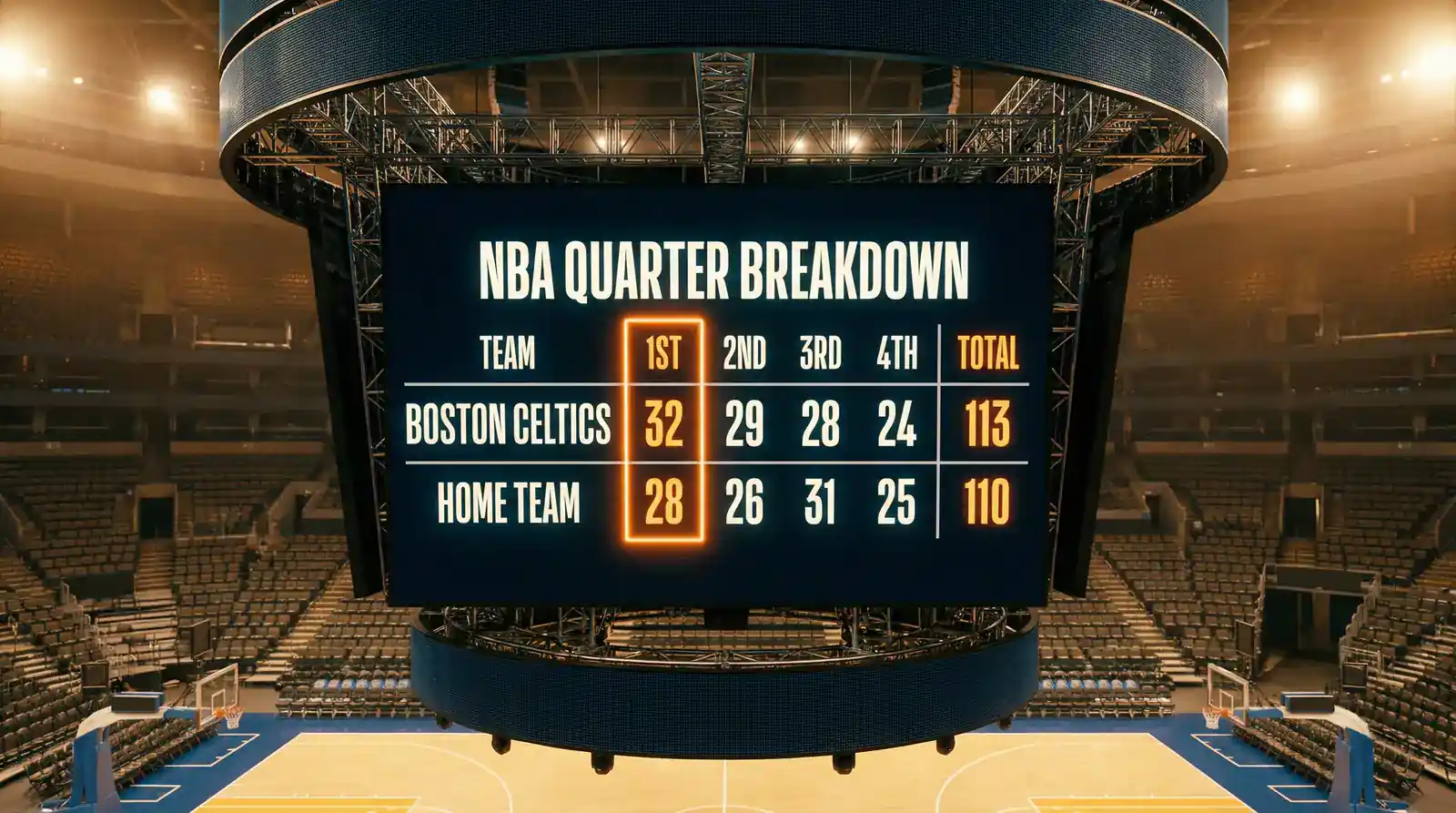
Quarter betting carves NBA games into smaller, more predictable segments. After nine years analysing basketball markets, I’ve come to appreciate these period bets as distinct opportunities rather than simply miniature versions of full-game wagers. Different dynamics govern each 12-minute chunk, and understanding those dynamics opens profitable angles that full-game betting obscures.
This guide covers everything UK bettors need to know about quarter markets, from settlement rules to strategic considerations for each period.
Available Quarter Betting Markets
UK bookmakers typically offer three core markets for each quarter: spread, total, and moneyline. The structure mirrors full-game betting but with adjusted numbers reflecting the shorter duration.
Quarter spreads usually range from -0.5 to -4.5 for first quarters, tighter than full-game spreads because 12 minutes provides less time for talent gaps to manifest. A team favoured by -8 for the full game might be -2 or -2.5 for the first quarter. By the fourth quarter, spreads can vary dramatically based on game state – if a heavy favourite trails at halftime, fourth-quarter spreads might flip entirely.
Quarter totals sit roughly one-quarter of the full-game total, adjusted for quarter-specific scoring patterns. If the game total is 224, first quarter totals might sit around 54-56. Fourth quarters often have slightly lower totals because of end-game fouling patterns and clock management, though close games can see elevated fourth-quarter scoring as both teams push pace.
Quarter moneylines follow the same logic as full-game moneylines but with tighter odds reflecting the increased randomness of shorter periods. Heavy full-game favourites are modest first-quarter favourites because 12 minutes isn’t enough to guarantee dominance. An 80% favourite for the full game might be 60-65% for any individual quarter.
Some bookmakers extend quarter markets further: first team to score, quarter winning margins, and race to a certain point total within the quarter. Availability varies by operator and game prominence – high-profile matchups get deeper quarter markets than Tuesday night games between struggling teams.
First Quarter Betting Strategies
First quarters carry unique characteristics that shape betting strategy. Teams often start with scripted offensive sets – plays they’ve practiced specifically for opening possessions. Defensive intensity tends to be highest early before fatigue sets in. Bench rotations haven’t begun, meaning starters play the full first quarter at most teams.
I track first-quarter tendencies obsessively. Some teams consistently start fast, jumping out to early leads before fading. Others start slowly, struggling to find rhythm in the opening minutes before turning it on mid-game. These patterns persist across seasons and create systematic edges.
Pace differs by quarter too. First quarters sometimes run slower as teams feel each other out, particularly in playoff matchups or first meetings between opponents. The fourth quarter’s frantic finish – intentional fouling, fast-paced possessions – doesn’t exist in the first quarter, affecting totals differently.
Home court advantage concentrates heavily in first quarters. The pre-game atmosphere, crowd energy, and familiar surroundings boost home teams early. That 2-3 point home edge documented for full games might manifest as a 1-1.5 point first-quarter advantage – proportionally larger relative to the quarter spread.
Travel and rest matter disproportionately in first quarters. A road team finishing a back-to-back often struggles in opening minutes as tired legs affect early execution. By the second half, adrenaline and game flow mask fatigue somewhat, but first quarters expose it clearly.
Why Quarter Bets Exclude Overtime
Here’s the fundamental principle: quarter bets settle on that quarter’s result only. Overtime doesn’t exist for quarter betting purposes because overtime isn’t a quarter – it’s an extension of the fourth quarter that occurs after regulation ends.
If you bet fourth quarter under 55.5 points and the quarter ends with teams tied at 27 each (54 total), your under wins. It doesn’t matter if they then combine for 25 more points in overtime. The fourth quarter ended at 54 points; overtime scoring is irrelevant to fourth-quarter markets.
About 6% of NBA games reach overtime – roughly 74 contests across a 1,230-game regular season. That percentage matters more for fourth-quarter bettors than for earlier periods because overtime only follows the fourth quarter.
Fourth-quarter totals behave differently than other quarters specifically because of this rule. End-game situations create unusual scoring patterns: intentional fouls send players to the line repeatedly, and trailing teams play at maximum pace while leading teams run clock. These dynamics inflate fourth-quarter scoring relative to other periods – but overtime scoring doesn’t count toward fourth-quarter settlements.
I find fourth-quarter markets trickier than first-quarter markets precisely because of these irregularities. First quarters are clean: both teams playing normally, no clock management, no overtime considerations. Fourth quarters are messy: game state dramatically affects strategy, and overtime exclusion creates settlement scenarios that feel counterintuitive.
Quarter Bet Settlement Rules
Settlement follows a straightforward principle: once the quarter ends, bets grade immediately based on the quarter’s final score. You don’t wait for the game to conclude; quarter markets are independent of the overall outcome.
This independence creates interesting scenarios. Your first-quarter bet might win decisively while your full-game bet on the same team loses badly. The team you backed might have dominated the first 12 minutes before collapsing. Quarter and full-game bets operate on separate tracks.
Abandoned games affect quarters already completed differently than quarters in progress. If a game stops midway through the third quarter, first and second quarter bets have already settled – those markets closed when each quarter ended. The incomplete third quarter voids, and fourth quarter bets void since that period never started.
Live quarter betting follows the same settlement rules. Whether you bet first-quarter spread pregame or jumped in mid-quarter at adjusted odds, settlement uses the same final quarter score. The timing of your bet doesn’t change how the market resolves.
Pushes in quarter markets work identically to full-game pushes. If the first-quarter spread is -2.5, no push is possible. If it’s -2 and the favourite wins the quarter by exactly 2, stakes return. Quarter totals hitting whole numbers exactly push when the line lacks a half-point.
Player props specific to quarters – “first-quarter points over 7.5” for a particular player – settle based on that player’s quarter statistics only. Season-long props or game-long props operate independently from quarter-specific props on the same statistical category. A player could hit his first-quarter over while missing his full-game over if he starts hot and cools off.
Frequently Asked Questions
Does overtime affect first quarter bets?
No. First quarter bets settle entirely on the first quarter’s result. Overtime occurs after the fourth quarter and has no bearing on any quarter-specific market. Your first quarter spread or total bet grades when the first quarter ends, completely independent of anything that happens later in the game.
Can I bet on individual quarters live?
Yes, most UK bookmakers offer live betting on quarters that are currently in progress. Odds adjust in real-time based on the score and time remaining. Once a quarter ends, live betting for that quarter closes and the market settles. The next quarter’s live market then opens.
Published by the nba Betting Rules team.