NBA Futures Betting UK: Your Guide to Championship and Award Markets
 Available in US
Table of Contents

I placed my first NBA futures bet in October 2016 — Warriors to repeat at 2.50. They lost to the Cavaliers in seven games. The sting of that loss lasted months, but it taught me something valuable: futures betting isn’t about predicting outcomes; it’s about identifying value in uncertainty. That distinction has guided nine years of profitable long-term NBA wagering.
Futures markets invite UK bettors to take positions on outcomes that won’t resolve for weeks or months. Championship winners. MVP races. Division titles. Season win totals. The extended timeframes create opportunities that don’t exist in game-to-game betting — but they also introduce complexities around settlement timing, player movement, and odds volatility that trip up inexperienced punters.
The scale of what we’re betting on deserves perspective. The average NBA franchise is now worth approximately $5.5 billion. These aren’t casual recreational leagues; they’re massive commercial enterprises where championship outcomes carry immense financial and reputational stakes. When you bet futures, you’re wagering on events that matter enormously to the participants — which means information asymmetries and market inefficiencies exist to be exploited.
The UK sports betting market is projected to reach $21.47 billion by 2030, growing at 11.4% annually. NBA futures represent a small but growing portion of that figure, driven by expanding American basketball viewership among British audiences and the accessibility of 24/7 betting platforms. Understanding how these markets work positions you to participate intelligently.
Types of NBA Futures Available in the UK
UK bookmakers offer NBA futures spanning team achievements, individual awards, and statistical benchmarks. The depth of market availability has increased substantially over recent years, tracking the growth of NBA interest among British sports bettors. What was once a niche offering limited to championship odds has expanded into a comprehensive futures menu.
The primary futures categories break down into team markets and player markets. Team futures focus on collective accomplishments — winning championships, conferences, divisions, or reaching specific playoff rounds. Player futures centre on individual recognition — MVP, Rookie of the Year, Defensive Player of the Year, and other annual awards. Understanding the differences between these categories matters for settlement purposes.
The global sports betting market reached an estimated $162.53 billion in 2025, with projections suggesting growth to $575.45 billion by 2035. NBA futures represent a growing slice of this expansion, particularly as American sports penetrate UK betting consciousness. Understanding the full range of available markets lets you diversify futures exposure across different outcome types rather than concentrating on championship betting alone.
NBA Championship Winner
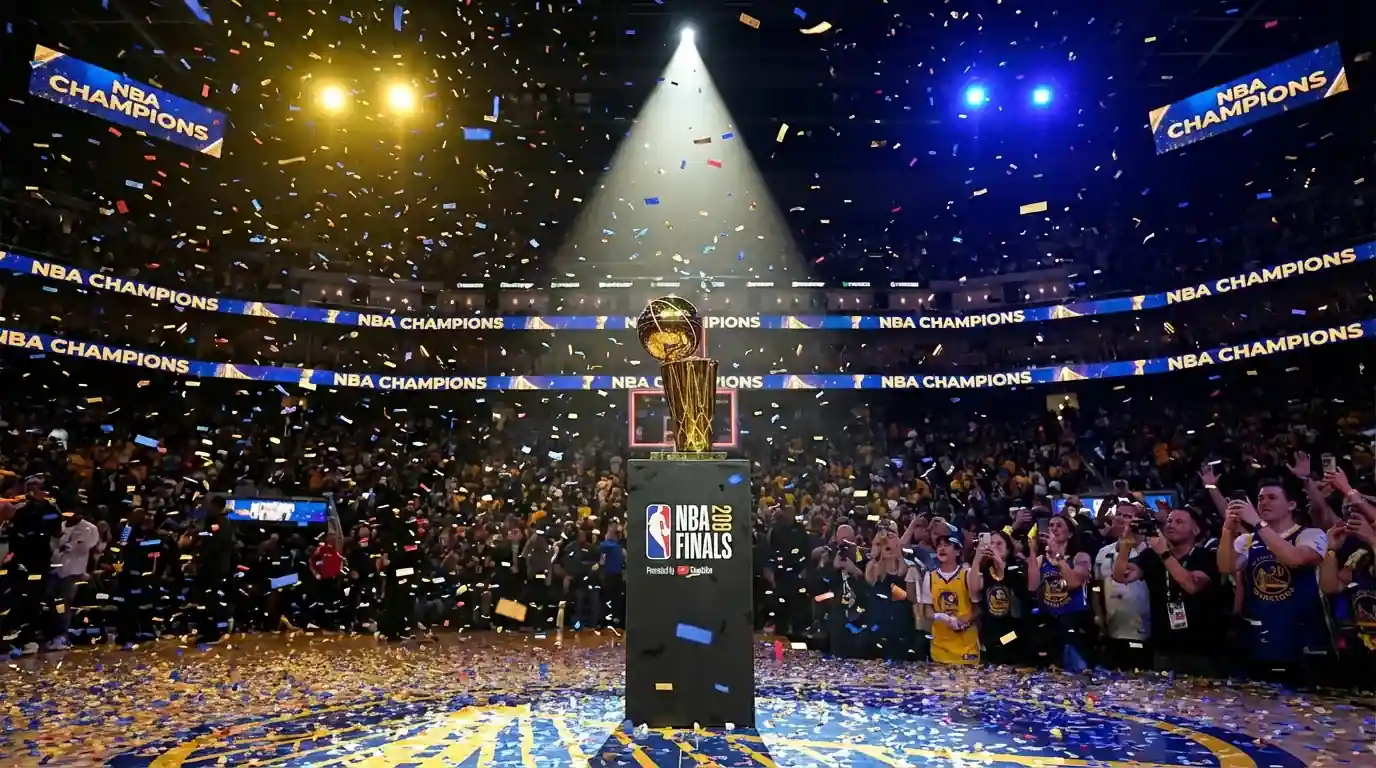
Championship futures represent the flagship NBA betting market. Every UK bookmaker with basketball coverage offers odds on which team will win the NBA Finals. Odds open in the summer following the previous Finals and remain available throughout the regular season and playoffs, updating continuously based on results, injuries, and trades.
Pricing spans from heavy favourites around 2.50-4.00 to longshots exceeding 500.00. Contending teams cluster at the short end; rebuilding franchises occupy the extreme long end. The distribution reflects genuine uncertainty — unlike some sports where one or two dominant teams suppress value, NBA championship markets typically feature 6-10 realistic contenders with meaningful odds differentiation.
The average NBA franchise valuation of $5.5 billion underscores what’s at stake for teams pursuing championships. Title-contending rosters command premium player salaries, luxury tax obligations, and operational investments. Your futures bet ties into a competitive ecosystem where billions of dollars incentivise maximum effort from ownership and players alike.
Settlement occurs when the NBA Finals conclude, typically in mid-June. Your money is locked from bet placement until then — potentially nine months if you bet preseason. This capital commitment distinguishes futures from shorter-term wagering and requires appropriate bankroll allocation.
Conference and Division Winners
Conference and division futures offer shorter paths to settlement than championship markets. Conference winners are determined when the NBA Finals matchup is set — you don’t need your team to win the title, just reach it. Division winners settle at the regular season’s conclusion based on final standings.
The NBA’s structure creates six divisions across two conferences. Eastern Conference divisions: Atlantic, Central, Southeast. Western Conference divisions: Northwest, Pacific, Southwest. Division titles carry home-court implications for playoffs but are primarily valuable for futures betting as distinct wagering opportunities.
Division futures often present better value than championship markets because they require less to go right. A team might win their division convincingly but falter in the playoffs — your division bet already won. I use division futures when I believe in a team’s regular season ceiling but have concerns about their postseason depth or matchup vulnerabilities.
Conference winner markets function similarly but with higher variance. Reaching the Finals requires winning three playoff series, any of which could go wrong. The odds reflect this — conference winner prices typically run about 60-70% of championship odds for the same team, accounting for the Finals hurdle being removed.
MVP and Individual Award Markets
Individual award futures let you bet on player recognition rather than team success. MVP dominates this category, but UK bookmakers also offer Rookie of the Year, Defensive Player of the Year, Sixth Man, Most Improved Player, and occasionally Coach of the Year. Each award has distinct voting criteria that affect how you should analyse candidates.
MVP voting involves media members casting ballots after the regular season concludes. The criteria blend statistical excellence, team success, and narrative appeal. A brilliant player on a losing team rarely wins; conversely, a good player on a great team might lose to a transcendent performer elsewhere. Understanding these dynamics is essential for MVP futures.
Rookie of the Year focuses exclusively on first-year players, making it the most predictable award market. By January, the field typically narrows to two or three realistic candidates. Early-season bets on eventual winners often offer substantial value before the market corrects.
Settlement for all individual awards occurs when winners are announced — typically during the first round of playoffs for regular season awards. Finals MVP settles immediately following the championship series conclusion. Your capital remains committed until these announcements, regardless of how obvious the outcome seems.
Regular Season Win Totals
Win totals ask you to predict whether a team will finish above or below a specified number of regular season victories. Lines typically range from the low 20s for rebuilding teams to the high 50s for elite contenders. The 82-game NBA season provides substantial sample size, making these markets more analysable than shorter campaigns.
I find win totals particularly appealing because they isolate regular season performance from playoff variance. A team might be perfectly constructed to accumulate wins against weaker opponents but struggle in playoff intensity — that team could easily exceed their win total while disappointing in the postseason.
Injury exposure represents the primary risk factor for win total bets. An 82-game season almost guarantees significant injuries to key players at some point. Teams with depth handle absences better than top-heavy rosters. When evaluating win totals, I assess not just the starting five but the quality of players seven through twelve on the rotation.
Settlement occurs when the regular season concludes in mid-April. Games postponed and rescheduled within the season count normally; games cancelled entirely would potentially void bets if the season length changes materially — though this scenario is rare outside extraordinary circumstances like the 2020 pandemic disruption.
When Futures Bets Are Settled
Settlement timing varies by market type, and understanding these windows helps you plan bankroll allocation. Championship futures lock up capital the longest — potentially October through June for preseason bets. That’s eight months where you can’t redeploy those funds elsewhere.
Division winners and win totals settle at regular season’s end in mid-April. Conference winners settle when Finals matchups are determined, typically early June. Individual awards settle when announced, which follows a staggered schedule during the first playoff round. MVP, Rookie of the Year, and other major awards typically get announced within days of each other.
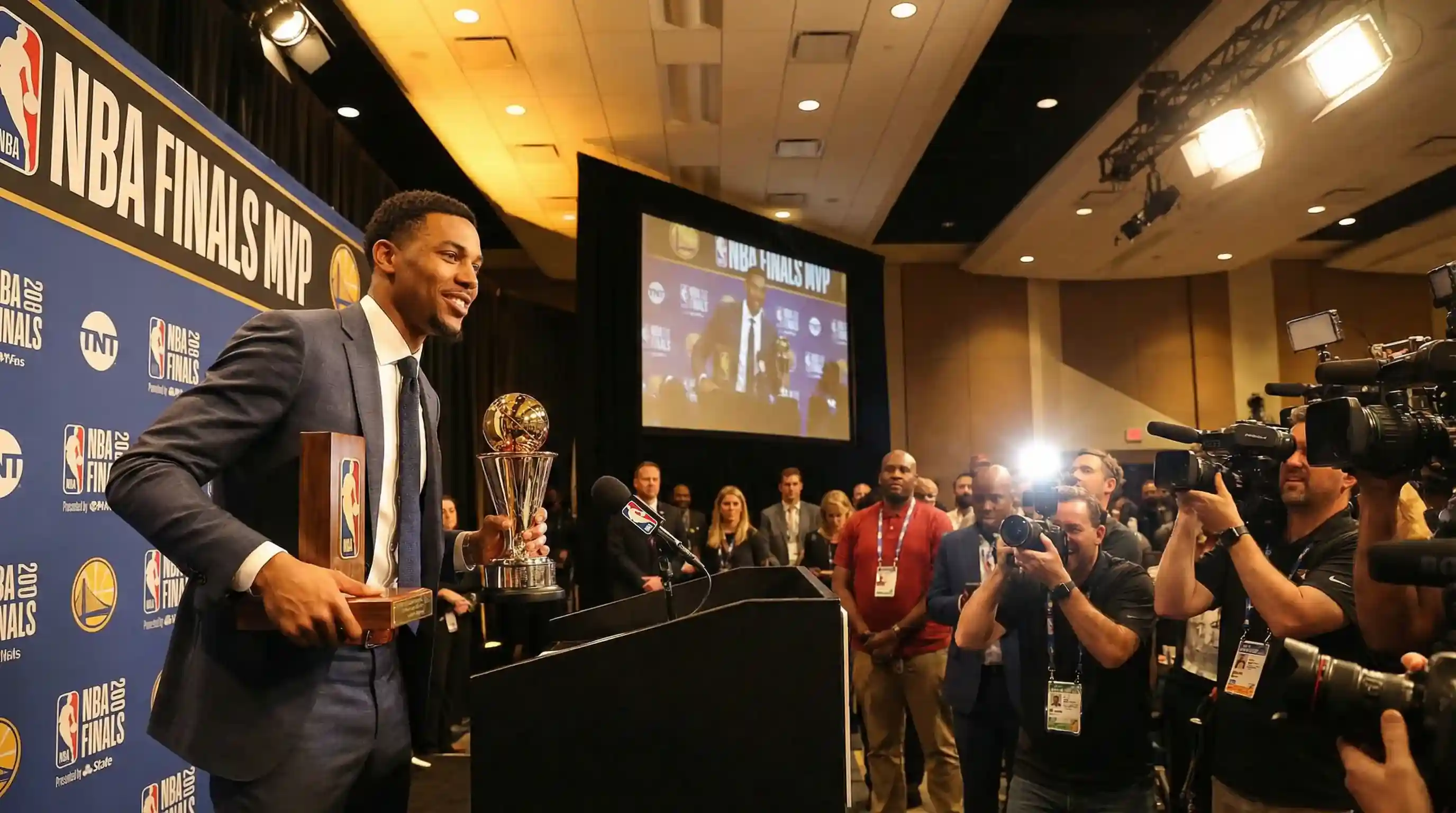
Finals MVP represents a unique case — settlement occurs immediately following the championship series, often the same night. If you’ve backed a player whose team wins the title and he’s named Finals MVP, you could see settlement within hours rather than waiting for a formal announcement event.
The extended settlement periods require patience that many bettors underestimate. Watching your futures position fluctuate in value over months, unable to realise gains or cut losses, tests emotional discipline. I allocate no more than 15-20% of my bankroll to futures specifically because of this liquidity constraint.
Some bookmakers offer early cash-out on futures, letting you lock in profit or limit losses before official settlement. This feature isn’t universal, and the offered prices typically favour the house substantially. Still, having the option provides flexibility that pure settlement-only markets lack.
The practical reality of futures settlement means you’re making decisions with information that will change dramatically before resolution. A championship bet placed in October uses projections about player health, team chemistry, and competition that will prove partially wrong by April. Accepting this uncertainty is fundamental to futures betting — you’re not buying certainty; you’re buying discounted exposure to possible outcomes.
Dead Heat Rules for Award Markets
Dead heats occur when two or more players tie for an award. While rare in NBA voting — tiebreaker procedures usually produce single winners — the possibility exists and affects how bets settle. UK bookmakers apply standard dead heat rules: your stake divides among the tied winners, and you receive proportional payment.
The mathematics work like this: suppose you backed Player A for MVP at 5.00 with a £10 stake. Player A ties with Player B for the award. Your bet settles as if you’d placed £5 on a winner at 5.00, returning £25 total — half the £50 you would have received from a solo victory.
Dead heat provisions appear in the terms and conditions for all award markets. Before placing significant futures bets on individual awards, I verify my bookmaker’s dead heat policy. While standard rules apply almost universally, confirming protects against unpleasant surprises in unlikely scenarios.
For team markets like championship or division winners, dead heats are essentially impossible — there’s always a single champion. Division ties based on record get resolved by tiebreaker criteria before standings finalise, producing a clear winner for betting purposes.
What Happens If a Player Is Traded or Injured
Player movement and injuries create the most frustrating futures scenarios. You’ve backed a player for MVP; he gets traded to a weaker team where he’ll struggle to win games. Your bet stands despite circumstances changing dramatically. This “all bets are action” principle applies broadly across futures markets.
Trades don’t void award futures. A player dealt mid-season remains eligible for awards based on cumulative performance across both teams. Voters consider the full body of work, though changing teams often disrupts MVP narratives. Your bet stays active regardless of where the player finishes the season.
Season-ending injuries are equally harsh. If your MVP candidate suffers an ACL tear in December, that bet is almost certainly lost — but it doesn’t void. The player simply won’t accumulate the statistics or wins necessary to compete for the award. Your stake stays committed to a functionally dead position.
Team futures follow similar logic. Championship bets on a team that trades away their star player don’t void. Division futures on a team decimated by injuries don’t void. The bet reflects the team as constructed at placement time, but all subsequent developments — positive or negative — affect outcome without triggering voiding provisions.
This reality shapes my futures strategy significantly. I avoid heavy concentration on any single player or team, preferring to spread futures exposure across multiple positions. Diversification doesn’t eliminate injury or trade risk, but it prevents any single personnel change from devastating my futures portfolio.
Each-Way Betting on NBA Futures
Each-way betting divides your stake into two parts: one on the selection to win outright, another on them to place within a specified number of positions. This structure is familiar to UK bettors from horse racing but applies differently to NBA futures given how awards and standings work.
For MVP markets, each-way typically pays on top-three finishes. If you back a player at 15.00 each-way with £10 (£20 total stake), you win the full amount if they take MVP, or receive a fraction — usually 1/4 or 1/5 odds — if they finish second or third in voting. This reduces variance by providing partial returns on near-misses.
Championship each-way often pays on reaching the Finals — your team doesn’t need to win the title, just get there. The place portion pays at reduced odds (typically 1/4 or 1/5) for the runner-up. This structure appeals when you believe in a team’s ability to contend but have concerns about matchup-specific Finals outcomes.
I use each-way selectively on longer-odds selections where the place terms offer genuine value. A 25.00 shot with each-way terms paying 1/4 for top-three effectively means 6.25 for placing. If I assess a player’s probability of finishing top-three as significantly higher than implied by those odds, the each-way structure extracts value from that assessment.
Not all bookmakers offer each-way on NBA futures, and terms vary between those that do. Verify the place positions and fraction before placing each-way bets — a market paying top-two at 1/4 odds differs substantially from one paying top-three at 1/5 odds. These details live in the market rules, usually accessible via an information icon near the each-way checkbox.
Understanding NBA Futures Odds Movements
Futures odds move continuously throughout the season, responding to results, injuries, trades, and betting volume. Understanding these movements helps you identify optimal entry points and avoid chasing inflated prices after value has evaporated.
The most dramatic movements occur around major trades. When a star player changes teams, both the acquiring and departing franchise see immediate odds adjustments — sometimes 50% or more in a single day. If you’ve been tracking a futures position and news breaks, acting quickly can capture value before lines fully adjust.
Injury news drives similar volatility. A star player’s knee injury might shorten championship odds from 5.00 to 12.00 within hours. Conversely, a clean bill of health after concerning symptoms can tighten odds dramatically. Following injury reports closely gives futures bettors informational edges.
The UK sports betting market’s projected growth to $21.47 billion by 2030 means increasing liquidity in NBA futures. More betting volume typically produces more efficient pricing, as larger markets are harder to move with individual wagers. This efficiency benefits sophisticated bettors who can identify remaining inefficiencies while making it harder to exploit obvious mispricings.
Seasonal patterns also affect odds. Championship prices tend to compress as the playoffs approach — longshots get longer while contenders converge. Award markets often see late volatility as voting approaches and narrative considerations become more influential. Timing your entries and exits around these patterns can enhance returns.
Navigating UK Bookmaker Futures Markets
Not all UK bookmakers approach NBA futures identically, and these differences matter for serious bettors. Market depth, odds competitiveness, early cash-out availability, and each-way terms vary between operators. Shopping across multiple accounts often yields better prices than committing to a single provider.
Market depth refers to how many futures options a bookmaker offers. Some provide basic championship and MVP markets; others extend to division winners, season statistical leaders, and exotic propositions. If you’re looking to bet Rookie of the Year or Most Improved Player, verify your bookmaker actually offers those markets before assuming availability.
Roughly 10% of UK adults bet on sports online according to Gambling Commission participation statistics. This relatively modest penetration means NBA futures markets remain thinner than football equivalents, creating occasional pricing discrepancies between operators. Maintaining accounts at multiple bookmakers lets you exploit these differences.
Cash-out functionality varies significantly for futures. Some bookmakers offer robust early settlement options with reasonable pricing; others restrict or exclude futures from cash-out entirely. If flexibility to exit positions matters to your strategy, prioritise operators with strong cash-out features.
For detailed coverage of how real-time NBA betting works at UK operators, including market availability and settlement timing during games, my guide to NBA live betting rules complements the futures perspective covered here.
Frequently Asked Questions
When are NBA championship futures settled?
Championship futures settle when the NBA Finals conclude, typically in mid-June. Your capital remains committed from bet placement until the final game of the series ends. If you bet in October, that’s approximately eight months of locked funds. Some bookmakers offer early cash-out options, but the offered prices heavily favour the house.
What happens to my MVP bet if the player misses significant games?
Your bet stands regardless of games missed due to injury or rest. MVP voting considers the full season context, and voters sometimes penalise players who missed substantial time. However, the bet doesn’t void — you’re simply backing a player whose candidacy has been damaged. This is why diversifying futures exposure across multiple players reduces injury risk.
Can I cash out NBA futures bets early?
Cash-out availability varies by bookmaker and specific market. Many UK operators offer early settlement on championship and MVP futures, though the pricing typically favours the house significantly. Not all futures qualify for cash-out, and the feature may be suspended during volatile periods. Check your specific operator’s terms before assuming cash-out will be available.
How do odds change throughout the NBA season?
Futures odds move continuously based on results, injuries, trades, and betting volume. Championship odds typically compress as playoffs approach — contenders converge while longshots drift further out. Award markets see late volatility as narrative considerations intensify near voting. Major news events like star player injuries or trades can shift odds 50% or more within hours.
Published by the nba Betting Rules team.